
Is Organic Roasted Seaweed Snack (Wasabi) Vegan?
The short answer is: MAYBE. While the core ingredients like organic seaweed and sunflower oil are strictly plant-based, the 'Natural Flavor' used to create the wasabi kick leaves a small gray area for strict vegans. This article breaks down exactly why this popular snack sits in a 'maybe' category and how to verify it fits your lifestyle.
The Ingredient Breakdown
When analyzing a product like Organic Roasted Seaweed Snack (Wasabi), we have to look beyond the marketing and into the chemistry of the flavoring. Let's look at the specific ingredients provided: ORGANIC SEAWEED, ORGANIC SUNFLOWER OIL, ORGANIC WASABI FLAVOR POWDER, and SEA SALT.
The first three ingredients are excellent news for vegans. Seaweed is a marine vegetable, and sunflower oil is derived from seeds. However, the red flag appears in the ORGANIC WASABI FLAVOR POWDER. This powder is a blend of ORGANIC DEXTROSE (a simple sugar, usually corn-derived and vegan) and NATURAL FLAVOR.
The term Natural Flavor is where the investigation begins. Legally, this term can hide a variety of sources. While most wasabi flavors are created using horseradish, mustard seed, and green dye (like spirulina or turmeric), some mass-market 'wasabi' products occasionally use trace animal-derived ingredients to round out the savory profile (umami), such as fish sauce derivatives or bonito extract. While it is less likely in an organic product, it is not impossible.
Furthermore, strict vegans often avoid ORGANIC DEXTROSE if it is processed using bone char filters, though this is rare in organic certification standards which prefer non-chemical filtration methods. Ultimately, the 'Natural Flavor' is the only ingredient preventing a 100% 'Yes' verdict.
Nutritional Value
From a nutritional standpoint, this snack is a lightweight champion. A standard serving usually contains between 25 to 40 calories, with the vast majority coming from the ORGANIC SUNFLOWER OIL. This provides a small amount of healthy unsaturated fats, which helps with the absorption of fat-soluble vitamins found in the seaweed, such as Vitamin A and Vitamin K.
The SEA SALT content is something to monitor. Seaweed naturally contains sodium, and added salt pushes this up. If you are salt-sensitive, portion control is key. However, compared to potato chips or pretzels, the sodium density per gram is lower because you are eating a very light, airy sheet. The ORGANIC DEXTROSE adds a negligible amount of sugar, usually less than 1g per serving, making this a low-sugar option compared to sweet granola bars or fruit snacks. It fits well into a calorie-restricted diet, provided you don't eat five packages in one sitting.
Frequently Asked Questions
Does Organic Roasted Seaweed Snack (Wasabi) contain dairy or gluten?
Is Organic Roasted Seaweed Snack (Wasabi) good for weight loss?
Where can I buy Organic Roasted Seaweed Snack (Wasabi)?
Is Organic Roasted Seaweed Snack (Wasabi) safe for kids?



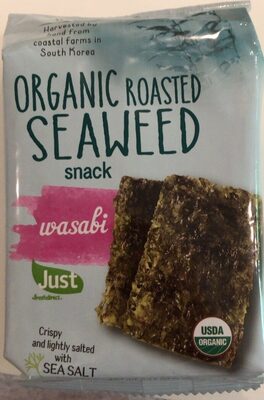
Organic Roasted Seaweed Snack (Wasabi)
Vegan Analysis
We recommend searching for certified Vegan alternatives.
Pro Tip
Always double-check the label. Manufacturers change ingredients frequently without notice!